Recently, the 224th session of the "Nanxiaoyan" micro-lecture hall of the 16th "Qianhu Research Lecture" Graduate Academic and Cultural Festival, sponsored by the Graduate Work Department of the Party Committee of Nanchang University and the University Graduate Student Union, and co-organized by colleges and their respective graduate student unions, was successfully held in Room 201 of the Graduate School. This "Nanxiaoyan" micro-lecture hall specially invited Yang Wenjun, a master's degree candidate from our college in 2023, to give a special lecture titled "Growth on the Research Path: Experiences and Reflections on Scientific Research, Competitions, and Civil Service Examination" to all graduate students of our college.
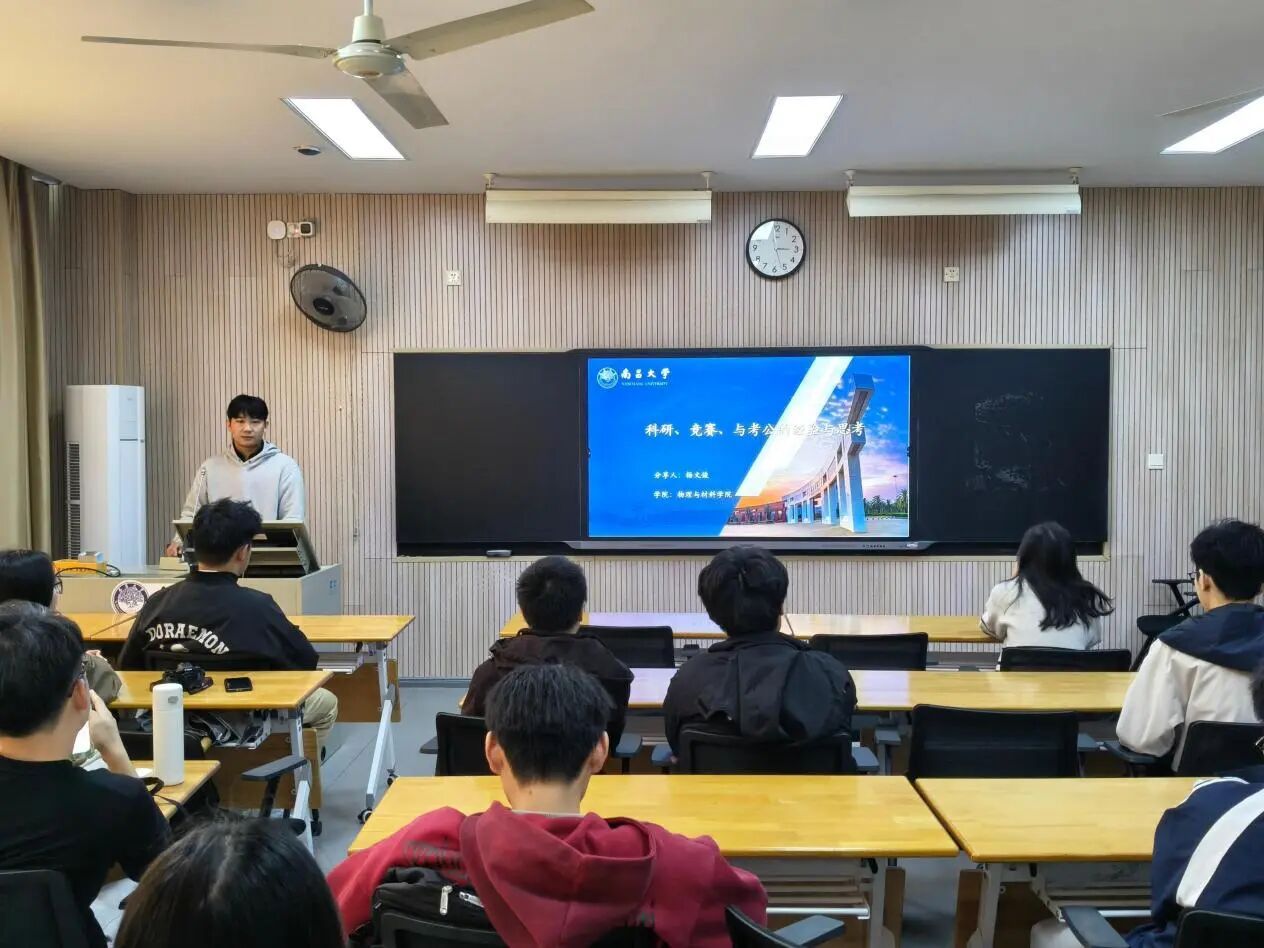
At the beginning of the lecture, Yang Wenjun emphasized that competitions are not "accessories" to scientific research, and suggested prioritizing the connection between school scholarships and recognized competitions, accurately matching project advantages with competition focuses. He pointed out that the core of participating in competitions is to translate research directions into market language, which can hone core job-seeking abilities such as business logic, team collaboration, and presentation skills. Moreover, honors such as the National Challenge Cup and national scholarships are "preferred" hard currency for many selected students from various regions. As a civil servant who majored in materials science, he reviewed the selection policies of Jiangxi, Guangdong, Jiangsu, and Zhejiang provinces, and specifically reminded Jiangxi candidates to "relay their applications": after the national civil servant examination, they can participate in the provincial civil servant examinations of Jiangxi, Guangdong, Jiangsu, Zhejiang, and Shanghai in early December, the Guangdong selected personnel examination in late December, and then the Jiangxi provincial civil servant examination in February or March of the following year, maximizing their chances of passing the examination.
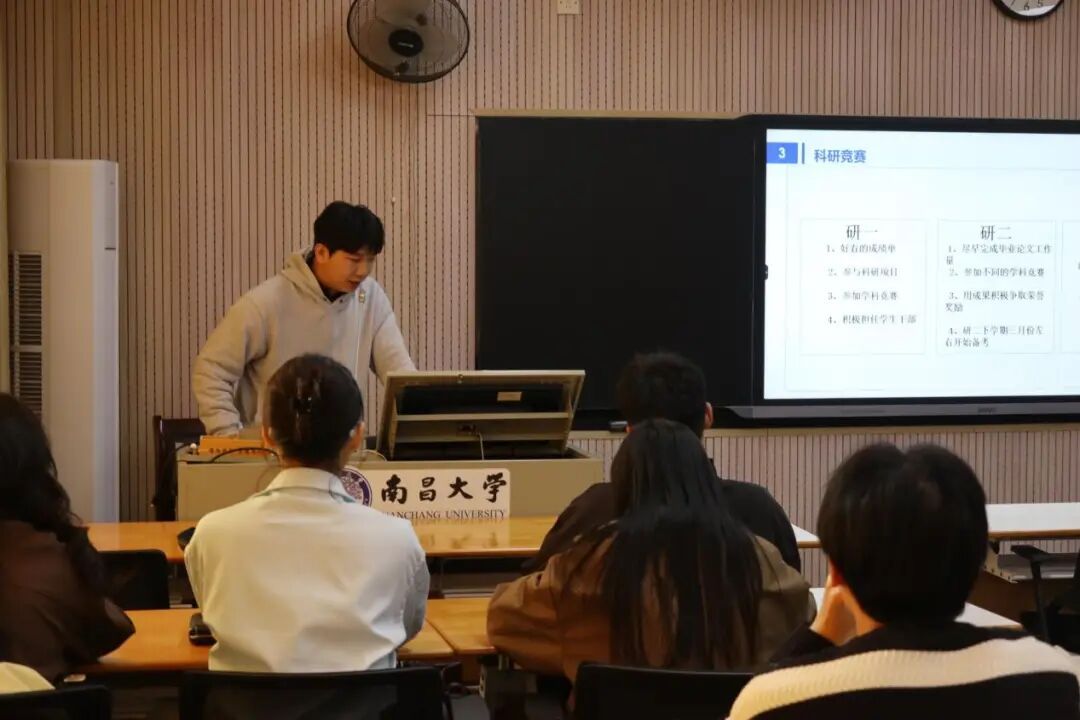
In response to the growth needs of graduate students at various stages, Yang Wenjun has formulated a clear action plan: in the first year, lay a solid foundation, maintain excellent grades, participate in scientific research projects, academic competitions, and student work, and comprehensively hone comprehensive abilities; in the second year, produce output, complete thesis experiments, compete for high-value competitions and honors, and simultaneously start preparing for civil service exams; in the third year, make a sprint, strive for selected qualifications, delve deeply into knowledge related to civil service exams, and orderly participate in various recruitment exams. Finally, he concluded with the phrase "Just do good deeds, don't worry about your future," encouraging his classmates to be down-to-earth and accumulate knowledge over time.
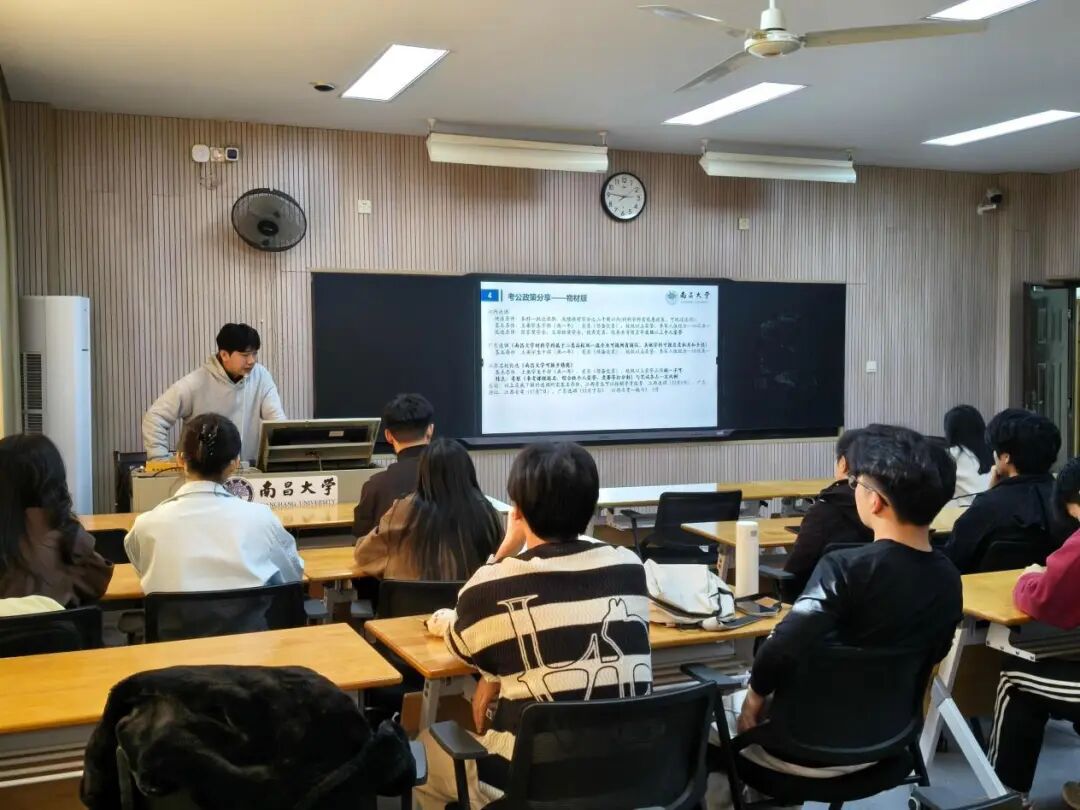
The sharing session was informative and focused, providing valuable practical guidance for our graduate students in career planning and comprehensive ability improvement. The college will continue to build a high-quality peer leadership platform, focusing on the diverse development needs of students, and provide support for more young students to steadily advance and achieve long-term success in academic research and career development.


 CHN
CHN