To broaden postgraduate students’ academic horizons and consolidate the development of on-campus academic culture, the 16th Qianhu Lecture of Nanchang University and the 259th Supervisor Forum of the Postgraduate Academic Culture Festival was successfully held in the conference room of the Life & Science Building on May 9, 2026.The forum featured an invited lecture delivered by Associate Professor Liang Xujun from Nanjing University and was presided over by Professor Wang Qisheng, Director of the Jiangxi Provincial Key Laboratory of Optoelectronic Detection. Postgraduate representatives from the college attended the event for academic exchanges.
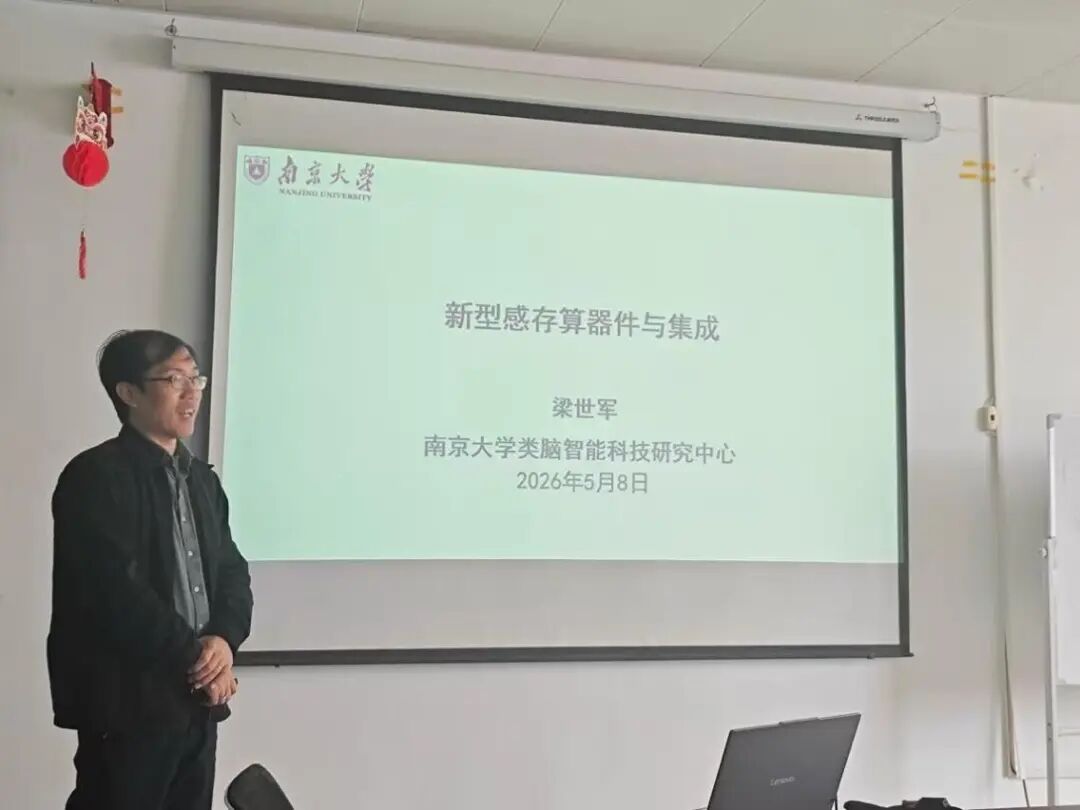
During the lecture, Dr. Liang Xujun delivered a presentation themed Novel Sensing in Edge Intelligent Computing, sharing his research team’s latest advances in the integrated sensing-memory-computing system and neuromorphic computing. He noted that prevailing artificial intelligence systems mostly rely on cloud computing, which is plagued by prominent drawbacks including lengthy data transmission time, high operational power consumption and severe signal latency. To break through existing technical bottlenecks in the industry, his team proposed a physically integrated scheme for sensing, memory and computation, offering innovative approaches to improve the efficiency of edge computing. In addition, drawing on the physiological mechanism of biological retinas, the research group developed a low-power neuromorphic computing architecture. By adopting two-dimensional materials for information encoding, the architecture enables high-parallelism analog computing with reduced power consumption.
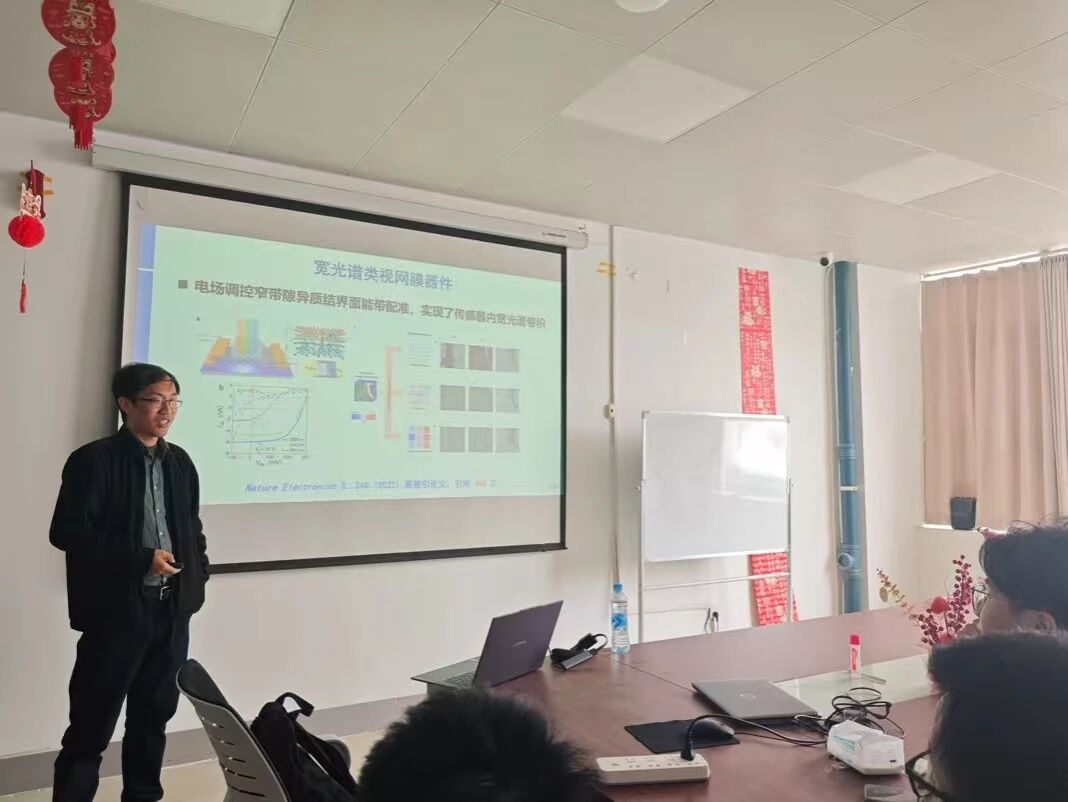
In terms of practical technical applications, the team has yielded abundant research achievements. Researchers leverage the active crosstalk mechanism between pixels to improve recognition accuracy under complex working conditions. They have also explored the direct conversion technology from optical information to semantics and developed dedicated data compression solutions tailored to aerospace remote sensing requirements, expanding the application scope of relevant technologies.Furthermore, Dr. Liang Xujun predicted that intelligent sensing technology will evolve toward multi-dimensional information fusion and facilitate the integration of silicon-based and carbon-based intelligence. Supported by brain-computer interfaces, biochips and other core technologies, such advances will break down barriers restricting the coordinated development of biological intelligence and artificial intelligence.
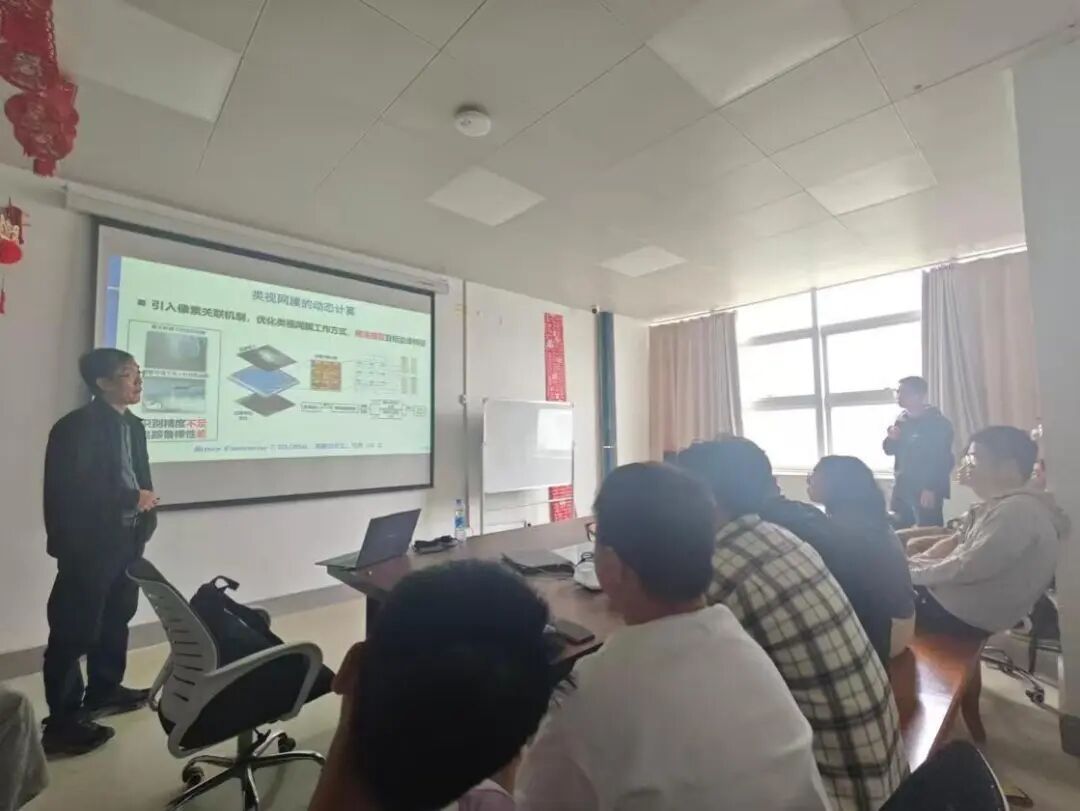
The interactive session was immersed in a vigorous academic atmosphere. Faculty and graduate students raised enthusiastic questions concerning imaging precision, information encoding, device application and other relevant topics. Combining his hands-on research experience, Dr. Liang Xujun provided detailed answers, clearing up academic doubts for the participants and inspiring new research ideas.
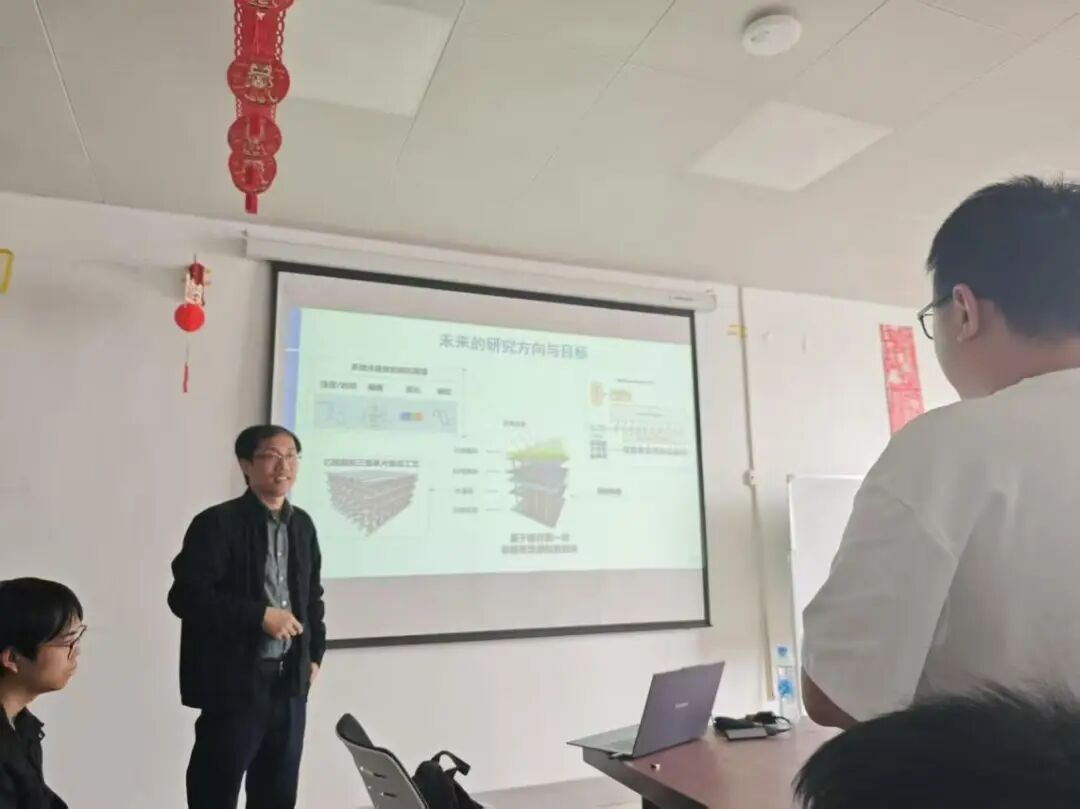
This lecture has built a high-quality platform for academic exchanges, disseminated cutting-edge research findings in intelligent sensing, and stimulated faculty and students’ enthusiasm for scientific innovation. Moving forward, our college will continue organizing various academic events, further advance the construction of postgraduate academic culture, foster a favorable research environment, and support the cultivation of high-level research talents.


 CHN
CHN