Recently, the research team of Prof. Wang Li and Prof. Wang Qisheng of our School, in collaboration with the team of Prof. Hu Weida and Prof. Wang Zhen from the Shanghai Institute of Technical Physics, Chinese Academy of Sciences, published an important research result in the internationally renowned journal ACS Photonics, titled "Solar-blind UV and NIR bipolar photodiode for 1069 key space optical encryption." In this work, the team innovatively developed a dual-band bipolar photodiode based on a lead selenide and perovskite heterojunction, and further constructed an optical image encryption system with an ultra-large key space based on this device. The study effectively overcomes the technical challenges in the field of dual-band photodetection and opens up a new direction for the development of high-security optical communication technologies.
Optical communication, with its advantages of high bandwidth and strong immunity to electromagnetic interference, has become an important means of modern information transmission. However, background light interference, signal scattering and absorption continue to threaten the reliability of communication and information security. Solar-blind ultraviolet (UV) light possesses excellent anti-interference capability, while near-infrared (NIR) light features low atmospheric transmission loss. A dual-band detection mode combining the two is therefore an ideal solution for enhancing the security of optical communication systems. Nevertheless, conventional photodetectors generally suffer from lattice and band mismatches when integrating solar-blind UV and NIR dual-band detection, which severely constrains the practical application of dual-band detection technology.
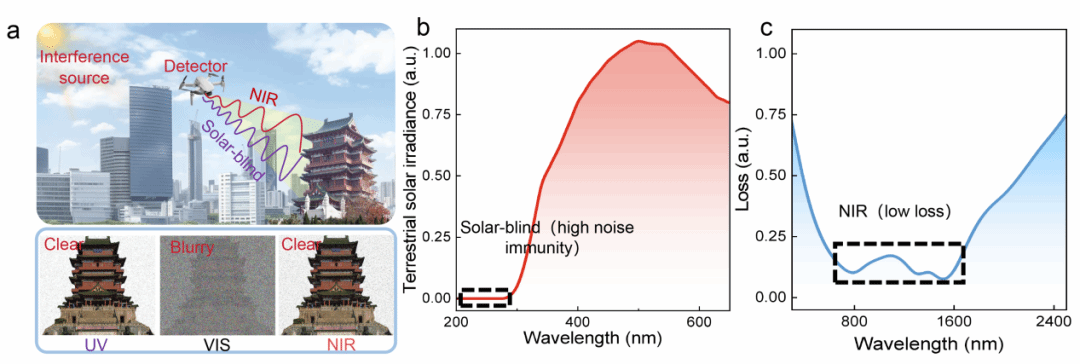
图 1 Application Scenarios of Secure Communication Based on Solar‑Blind Ultraviolet-Near‑Infrared Dual-Band
To address this industry bottleneck, the joint research team proposed a novel architecture of a dual-band bipolar photodiode based on a lead selenide and perovskite heterojunction. By adopting a back-to-back band alignment structure, the team achieved bias-tunable response polarity modulation across the full spectrum, successfully resolving the lattice and band mismatch issues encountered during the dual-band integration process. Based on this high-performance dual-band photodiode, the team further constructed an optical image encryption system with a key space as large as 1069, featuring an extremely high level of encryption security. By fully combining the dual advantages of solar-blind UV and NIR light, this technology substantially enhances the anti-interference capability and information confidentiality of optical communication, and holds broad application prospects in secure communication, information security, and optical imaging.
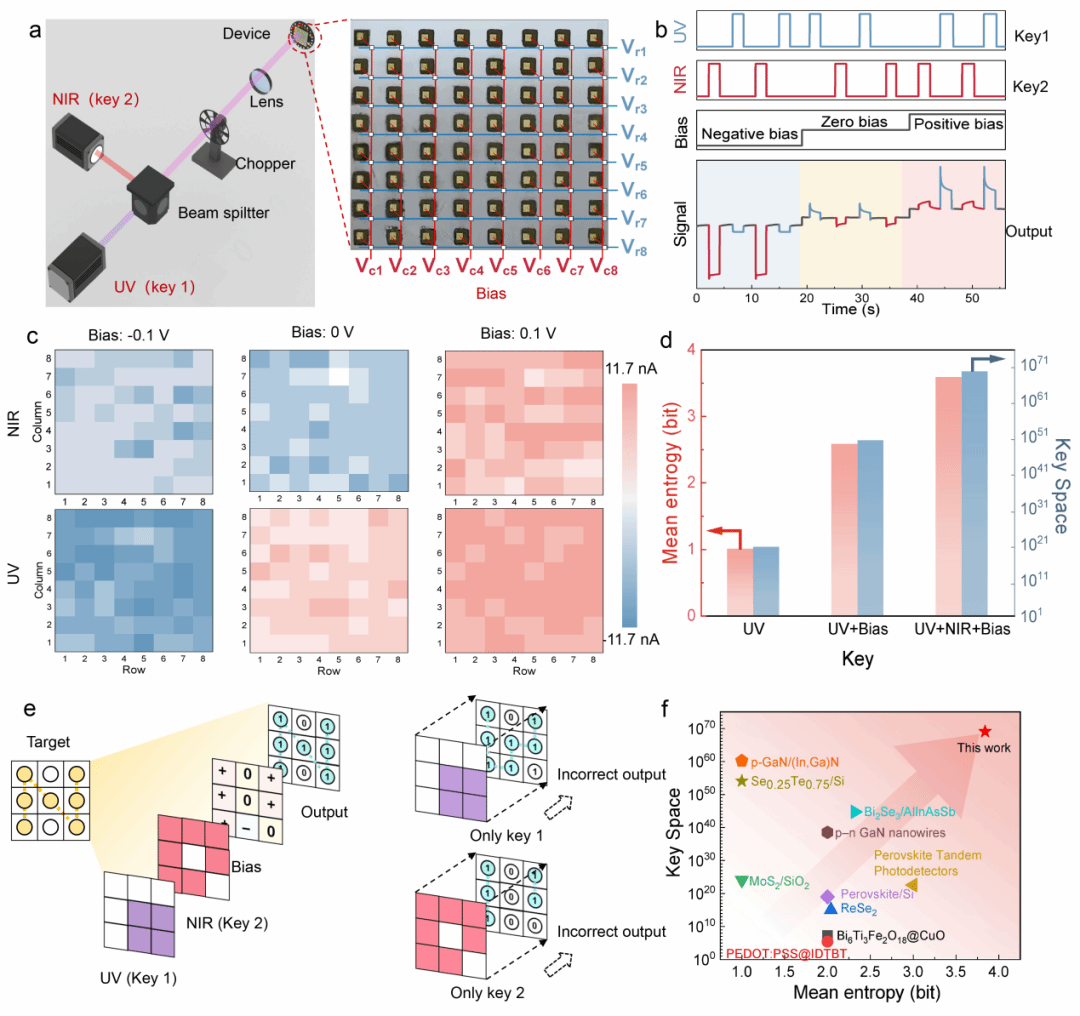
图 2 Optical Encryption Performance of PbSe/CsPbBr3 Heterojunction Device Arrays
This research breaks through the technical limitations of conventional dual-band photodetector devices and establishes an innovative technology roadmap that integrates materials, devices, and information encryption, providing a solid theoretical foundation and a feasible practical paradigm for the development of high-performance dual-band optoelectronic devices and the design of optical encryption systems with ultra-high security levels.
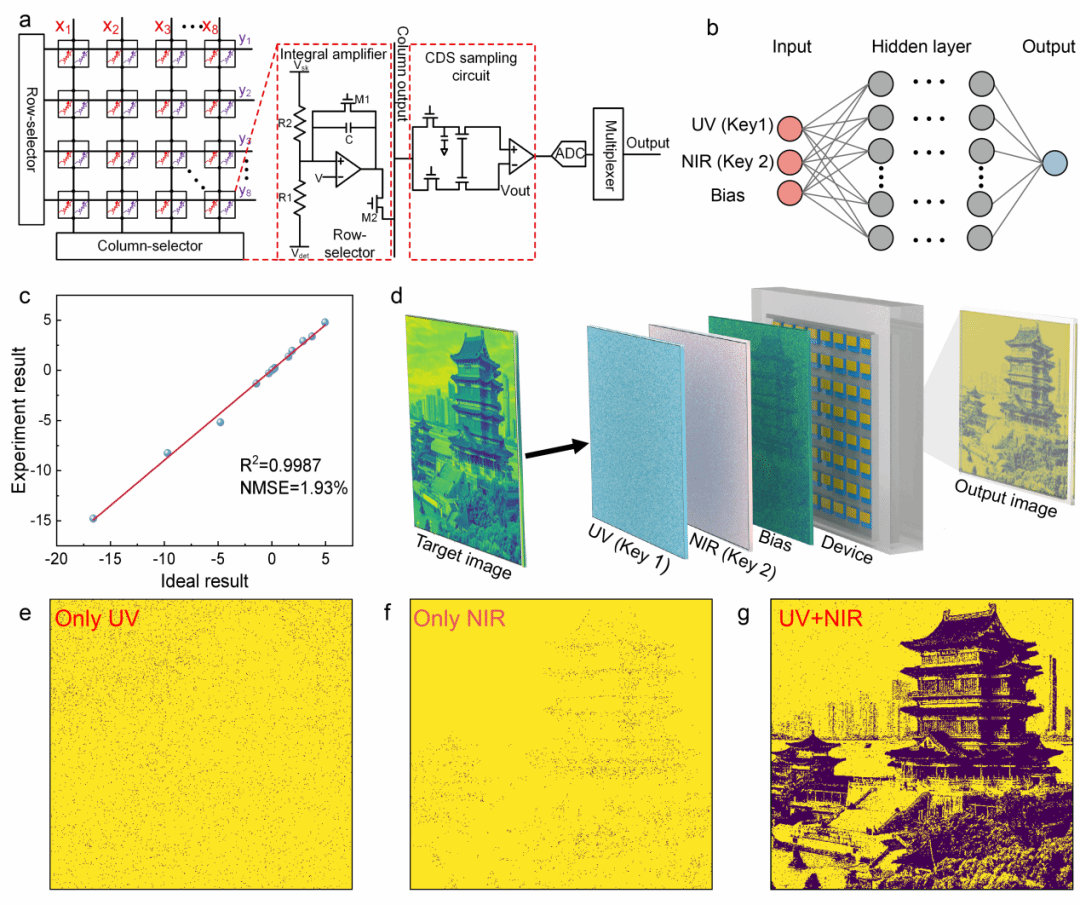
图 3 Hardware‑Algorithm Co-Design and Encryption System Demonstration
This study lists Nanchang University as the first affiliation and corresponding affiliation. PhD students Zhen Mingshuo and Zhang Xianjing of our School are the co-first authors of the paper, while Prof. Wang Li and Prof. Wang Qisheng of the School of Physics and Materials, together with Prof. Wang Zhen of the Shanghai Institute of Technical Physics, Chinese Academy of Sciences, serve as the corresponding authors. This research received strong support from multiple national and provincial research platforms and programs, including the National Overseas High-Level Talent Recruitment Program, the National Natural Science Foundation of China, the Key Projects and Basic Frontier Projects of the Natural Science Foundation of Jiangxi Province, the Jiangxi Provincial Key Laboratory of Photoelectric Detection, and the world-class discipline construction project of Materials Science and Engineering at Nanchang University. Taking this achievement as an opportunity, our School will continue to deepen research at the intersection of optoelectronic materials, intelligent detection, and optical information security, further strengthen cross-institutional scientific collaboration, and concentrate efforts on tackling key core technologies, striving to produce more high-level research achievements that contribute to the high-quality development of the discipline and the technological upgrading of related industries.
Paper link:https://pubs.acs.org/doi/10.1021/acsphotonics.6c00576


 CHN
CHN